An Esoteric Exploration
Natural
Law
"The lips of wisdom are closed, except to the ears of understanding."
— The Kybalion
The Universe is governed by immutable principles
Long before the rise of modern science, ancient mystery schools preserved a body of knowledge concerning the fundamental operations of reality. These teachings — encoded in allegory, symbol, and hermetic axiom — describe a cosmos that is not arbitrary but lawful, not chaotic but ordered by principles as precise as mathematics and as vast as consciousness itself.
Natural Law is not a human invention. It is not legislation, nor social contract. It is the inherent, universal, non-man-made, binding, and immutable condition that governs the consequences of behavior for all intelligent beings. It exists whether we acknowledge it or not, operating silently beneath the surface of all phenomena.
Mens Universi
Principle 1 of 7
The Principle of
Mentalism
"THE ALL is Mind; the Universe is Mental."
At the foundation of all Hermetic thought lies the principle that the underlying nature of reality is consciousness itself. The material universe, with all its apparent solidity, is a manifestation of an infinite living Mind. Matter is not the ground of being — Mind is. Every atom, every galaxy, every thought you have ever held arises within and is sustained by this universal mental substrate.
This is not mere philosophy — it is the operational key to all transmutation. If reality is fundamentally mental, then the quality of our thoughts, beliefs, and internal states directly shapes the world we inhabit. The master alchemist does not work upon base metals but upon the substance of consciousness. To change the outer, one must first change the inner.
Explore roots & practice →
Quod Est Superius
Principle 2 of 7
The Principle of
Correspondence
"As above, so below; as below, so above."
The structure of reality is fractal and self-similar across all planes of existence. The patterns that govern the movement of galaxies are reflected in the spiraling of a seashell, in the structure of DNA, in the orbits of electrons. There is a thread of correspondence that links the macrocosm to the microcosm, the celestial to the terrestrial, the spiritual to the material.
This principle is the basis of all analogy and all true symbol. By studying the laws operating on one plane, we can infer the laws of the planes above and below. The human body mirrors the cosmos. The structure of the atom mirrors the solar system. To know thyself is, in a very real sense, to know the universe — for you are a holographic fragment of the whole.
Explore roots & practice →
Nihil Quiescit
Principle 3 of 7
The Principle of
Vibration
"Nothing rests; everything moves; everything vibrates."
From the densest matter to the most rarified spirit, everything in existence is in a state of perpetual motion. What appears solid is a symphony of vibrating particles. What appears still is merely vibrating below the threshold of perception. The difference between matter, energy, mind, and spirit is simply a difference in the rate and character of vibration.
Emotion is vibration. Thought is vibration. Sound, color, light — all are expressions of vibratory frequency along an infinite spectrum. One who understands this principle can alter their own vibratory state at will, transmuting fear into courage, hatred into love, ignorance into understanding. This is the secret science behind all prayer, mantra, and the transformative power of music.
Explore roots & practice →
Omnia Dualia
Principle 4 of 7
The Principle of
Polarity
"Everything is dual; everything has poles; everything has its pair of opposites."
Hot and cold are not different things — they are degrees of the same thing. Love and hate, light and darkness, courage and fear: all are poles of a single continuum. Opposites are identical in nature but different in degree. This principle reveals that all apparent contradictions are reconcilable, and that the conflict we perceive in the world is the dynamic tension of a deeper unity.
Herein lies one of the most potent tools of mental alchemy: the art of polarization. Since opposites are merely extremes of the same spectrum, the adept can shift their mental state along any emotional or psychological axis by an act of will. You cannot destroy an unwanted state, but you can transmute it by deliberately shifting your attention toward its opposite pole.
Explore roots & practice →
Omnia Fluunt
Principle 5 of 7
The Principle of
Rhythm
"Everything flows, out and in; everything has its tides; all things rise and fall."
The pendulum swing manifests in everything. There is a measured motion between the two poles of every phenomenon. Action and reaction, advance and retreat, rise and fall — the rhythm of the universe is ceaseless. Empires rise and crumble. Seasons turn. Breath enters and leaves the body. The tide flows in and recedes.
The uninitiated are carried helplessly on the swing of the pendulum — elated in triumph, crushed in defeat, swinging endlessly between extremes. The initiate, however, learns the art of neutralization: rising above the swing to a point of equilibrium from which they can observe the rhythm without being mastered by it. This is the secret of composure, equanimity, and inner peace.
Explore roots & practice →
Causa et Effectus
Principle 6 of 7
The Principle of
Cause & Effect
"Every cause has its effect; every effect has its cause."
Nothing happens by chance. What we call chance is merely a name for an unrecognized cause. Every action, every thought, every choice sends ripples through the causal fabric of reality. The universe is an infinite web of causation, and nothing — nothing at all — exists outside of it. This is the principle that underpins all moral responsibility and all natural consequence.
Most human beings live on the plane of effects, reacting to circumstances, buffeted by conditions they believe to be outside their control. The master rises to the plane of causes, becoming a mover rather than a moved piece. By aligning thought, emotion, and action with conscious intent, one ceases to be a mere pawn in the game and becomes a player — perhaps even a creator of the game itself.
Explore roots & practice →
Generatio
Principle 7 of 7
The Principle of
Gender
"Gender is in everything; everything has its masculine and feminine principles."
This principle extends far beyond biological sex. Gender — the interplay of the generative and the receptive, the active and the passive, the projective and the attractive — is present on every plane of existence. No creation, whether physical, mental, or spiritual, is possible without the union of these two complementary forces.
Within every mind exists both the masculine principle (will, focused intent, the directive force) and the feminine principle (imagination, intuition, the creative matrix). True creation — whether of art, of ideas, or of reality itself — requires the conscious marriage of these inner polarities. The androgyne of the alchemists is not a biological statement but a spiritual one: wholeness comes from the integration of all aspects of self.
Explore roots & practice →
Interactive Map
The Web of Principles
The seven Hermetic principles do not operate in isolation — each shapes and is shaped by the others. Click any principle to explore its cross-connections.
Click a principle to explore connections
Select a principle
The force-directed graph shows the gravitational relationships between the seven laws. Stronger connections pull nodes closer together.
Interactive Visualization
Scales of Reality
From quantum probability to cosmic web — the same patterns repeat at every scale. Scroll, use arrow keys, or click to traverse the levels of existence.
Vibration
Quantum
Scale 1 / 9
Quantum
The Probability Field
At the quantum scale, matter dissolves into probability. Electrons exist as waves of potential — collapsing into positions only when observed. The observer participates in creating the observed reality.
Foundational Framework
Eight Core Teachings
The following principles form the operational backbone of natural law study — not articles of faith, but precise statements about the structure of reality and the conditions necessary for genuine change.
Truth is Eternal & Objective
Truth is singular, eternal, and exists independently of any observer. Perception is not truth — it is a filter, shaped by conditioning, trauma, and ideology. The work of the sincere seeker is not to create truth but to align their perception ever more precisely with what is already and has always been real.
Natural Law Governs All Consequences
Natural law comprises universal, spiritual laws that govern the consequences of behavior for all intelligent beings — impersonally, immutably, and without exception. No being — regardless of status, belief, or power — is exempt. These laws do not punish or reward. They simply produce consequences with the impartiality of mathematics.
Knowledge Has Been Occulted
The word 'occult' means simply 'hidden.' The knowledge of natural law has been deliberately concealed by those who understood it, in order to maintain power over those who did not. The remedy is not conspiracy theory — it is education. The greatest weapon of any system of control is the ignorance of those it seeks to govern.
Cultivate Teachability
The teachable mind is neither credulous nor dismissive. It holds skepticism and openness in dynamic balance — willing to question everything, including its own certainties, while remaining genuinely receptive to new evidence. Both arrogance and gullibility are forms of mental closure. The teachable mind stays open at both ends.
Change Requires Knowledge Turned to Action
Recognition alone changes nothing. Knowledge without application is inert. Real change follows a precise sequence: recognition of a problem, accurate diagnosis through genuine knowledge, and then decisive action. Faith, belief, and positive thinking are insufficient substitutes for this triad. The universe rewards the doer, not the believer.
Consciousness: The Triune of Thought, Emotion & Action
Consciousness expresses itself through three interrelated modalities: thoughts (the cognitive), emotions (the affective), and actions (the behavioral). True alignment — and therefore true power — comes when all three are integrated and coherent. This triune mirrors the sacred trinities found across world traditions, but it is grounded in observable, practical reality.
Reject Passivity — The Trap of False Spirituality
Certain strands of the New Age movement and solipsistic philosophy promote a spirituality of passivity: the idea that outer change will come through inner acceptance alone, that reality is purely subjective, that action is unnecessary. This is a sophisticated ideological trap. It neutralizes the masculine principle of directed action and leaves the adherent perpetually at the mercy of forces they refuse to engage.
Natural Law is Scientific, Not Metaphorical
Natural law is not a spiritual metaphor or a cultural belief system. It is a discoverable, testable, universal system of cause and effect — as impersonal as gravity and as consistent as mathematics. Your beliefs do not affect natural law any more than denying gravity prevents you from falling off a cliff. Ignorance of the law is not a defense. It is simply a guarantee of consequences.
Key Takeaways
Highlights, Practices & Structure
Key Statements
There is nothing new here; the truth is singular and eternal — it has always been here and will always be here.
Natural law is universal, non-man-made, binding, and immutable — the conditions that govern the consequences of behavior.
Your beliefs do not affect natural law any more than denying gravity keeps you from falling off a cliff.
Change is only created through knowledge turned into action, not through passive acceptance or belief alone.
Practical Applications
Suspend Immediate Emotional Rejection
Focus on the content and its internal logic, not on the presenter's demeanor, style, or delivery. The ego defends itself through aesthetic dismissal. Learn to separate the message from the messenger.
Cultivate a Teachable Mindset
Balance skepticism with genuine openness. Neither accept nor reject anything automatically. Hold claims provisionally while you investigate. Arrogance and gullibility are equally effective barriers to knowledge.
Research and Verify Personally
Do not accept any claim on authority alone — including from this source. Trace the reasoning. Check the evidence. The only knowledge that becomes yours is knowledge you have personally verified and understood.
Recognize and Reject Ideological Traps
Identify belief systems that promote perpetual passivity as wisdom — solipsism, nihilism, extreme quietism, and certain strands of new-age thought. These are sophisticated forms of learned helplessness.
Understand Natural Law as Impersonal Reality
Natural law is not a spiritual practice you opt into. It operates whether acknowledged or not. The goal is not to 'use' it but to understand it sufficiently to stop violating it through ignorance.
Integrate Thought, Emotion & Action
Express consciousness through all three of its modalities simultaneously. Thinking the right thing while feeling something different, or feeling the right thing while doing nothing — both are forms of fragmentation. Integration is the goal.
Diagnose Root Causes, Not Symptoms
Any problem — personal, social, or civilizational — has root causes and surface symptoms. Treating only symptoms is an infinite loop. Acquire the knowledge necessary to identify the actual cause, then address that.
Logical Sequence
The Structure of the Teaching
The material follows a deliberate logical progression — each stage building upon the last.
Introduction
Establishing the stakes and the nature of the inquiry
Mindset Preparation
Cultivating the teachable mind required to receive the material
Defining Knowledge
Distinguishing genuine understanding from belief, opinion, and conditioned response
Critiquing Belief Structures
Identifying and dismantling ideological frameworks that obstruct truth
Problem Identification
Naming the central problem: ignorance of natural law and its consequences
Definitions
Establishing precise definitions as the foundation of all further reasoning
Understanding Consciousness
Mapping the triune structure of thought, emotion, and action
The Necessity of Action
The conclusion: knowledge without action is inert; the only path forward is integrated, conscious doing
Living the Principles
The Art of Applied Wisdom
Ancient knowledge divorced from lived experience becomes mere intellectual ornament. Each principle carries within it a direct technology for the transformation of daily life.
The Unbroken Current
Ancient Mystery Schools
The same river of wisdom has flowed through countless channels across millennia — each tradition a different vessel holding the same living water.
Before History · Global
The Primordial Tradition
Before writing, before civilization as we know it, there existed a perennial current of esoteric knowledge transmitted orally, ritually, and through direct initiatory transmission. From the cave paintings of Lascaux to the astronomical alignments of megalithic sites worldwide, evidence points to an ancient understanding of cosmic order that predates any named tradition.
Key Figures
Core Concepts
~3000–500 BCE · Ancient Egypt
Kemet — The Egyptian Mysteries
The temples of Egypt were not merely places of worship — they were universities of consciousness. The Mystery Schools of Heliopolis, Memphis, Thebes, and Karnak preserved a cosmological science encoded in hieroglyph, architecture, and ritual. The concept of Ma'at — truth, justice, cosmic balance — was not a moral ideal but a description of Natural Law itself.
Key Figures
Core Concepts
~600–400 BCE · Greece & Asia Minor
The Greek Mystery Schools
Greek philosophy, at its deepest, was not merely intellectual — it was initiatory. The Eleusinian Mysteries offered direct experiential encounter with death and rebirth. Pythagoras synthesized Egyptian and Eastern wisdom into a numerological cosmology. Plato's dialogues are initiatic documents, with the allegory of the cave describing humanity's condition with unsurpassed precision.
Key Figures
Core Concepts
~500 BCE–500 CE · Indian Subcontinent
The Vedic & Upanishadic Tradition
The Vedic rishis (seers) did not compose the Vedas — they perceived them. The Upanishads represent the summit of this perception: a radical non-dual metaphysics in which the individual soul (Atman) is recognized as identical with the universal ground of being (Brahman). This insight — Tat Tvam Asi, 'That thou art' — is the core of all mystical realization.
Key Figures
Core Concepts
~300 BCE–600 CE · Alexandria, Egypt
Hermeticism & Neoplatonism
Alexandria was the most extraordinary confluence of minds in human history. Here, Egyptian, Greek, Jewish, Persian, and Indian wisdom streams met and interpenetrated. The Hermetic corpus — attributed to Hermes Trismegistus, 'the Thrice-Great' — emerged from this crucible, articulating the seven principles that govern all planes of being. Plotinus extended Plato into a mystical cosmology of The One, Nous, and Soul.
Key Figures
Core Concepts
~200–1700 CE · Iberia, Palestine, Eastern Europe
Kabbalah — The Jewish Mystical Tradition
Kabbalah (literally 'that which is received') is a tradition of direct mystical encounter with the divine, transmitted lineage to lineage. Its central map — the Tree of Life, or Etz Chaim — is among the most sophisticated models of consciousness and cosmos ever devised. The Sefirot (emanations) describe how the infinite, unknowable Ein Sof manifests progressively into the finite world of experience.
Key Figures
Core Concepts
~500 BCE–present · China
Taoism — The Way
The Tao Te Ching opens with the declaration that the Tao which can be named is not the eternal Tao. This is not evasion — it is precision. The Tao (Way) is the nameless, formless source and sustaining principle of all existence. Natural Law, in the Taoist understanding, is not a set of rules but a quality of movement: the wu wei (non-forcing action) of water, which yields yet overcomes all.
Key Figures
Core Concepts
1875–present · Europe & Americas
The Western Esoteric Revival
The 19th and 20th centuries witnessed a remarkable resurgence of esoteric knowledge. The Theosophical Society gathered threads from global traditions into a synthetic cosmology. The Hermetic Order of the Golden Dawn produced an extraordinary flowering of ritual magic and inner science. Aleister Crowley's Thelema articulated the supreme law: 'Do what thou wilt shall be the whole of the Law' — not license, but the discovery and enactment of one's true purpose, or True Will.
Key Figures
Core Concepts
Beyond the Seven
Other Esoteric Traditions
From the deserts of Arabia to the forests of China — each tradition illuminates a different facet of the same jewel.
Thelema
True Will
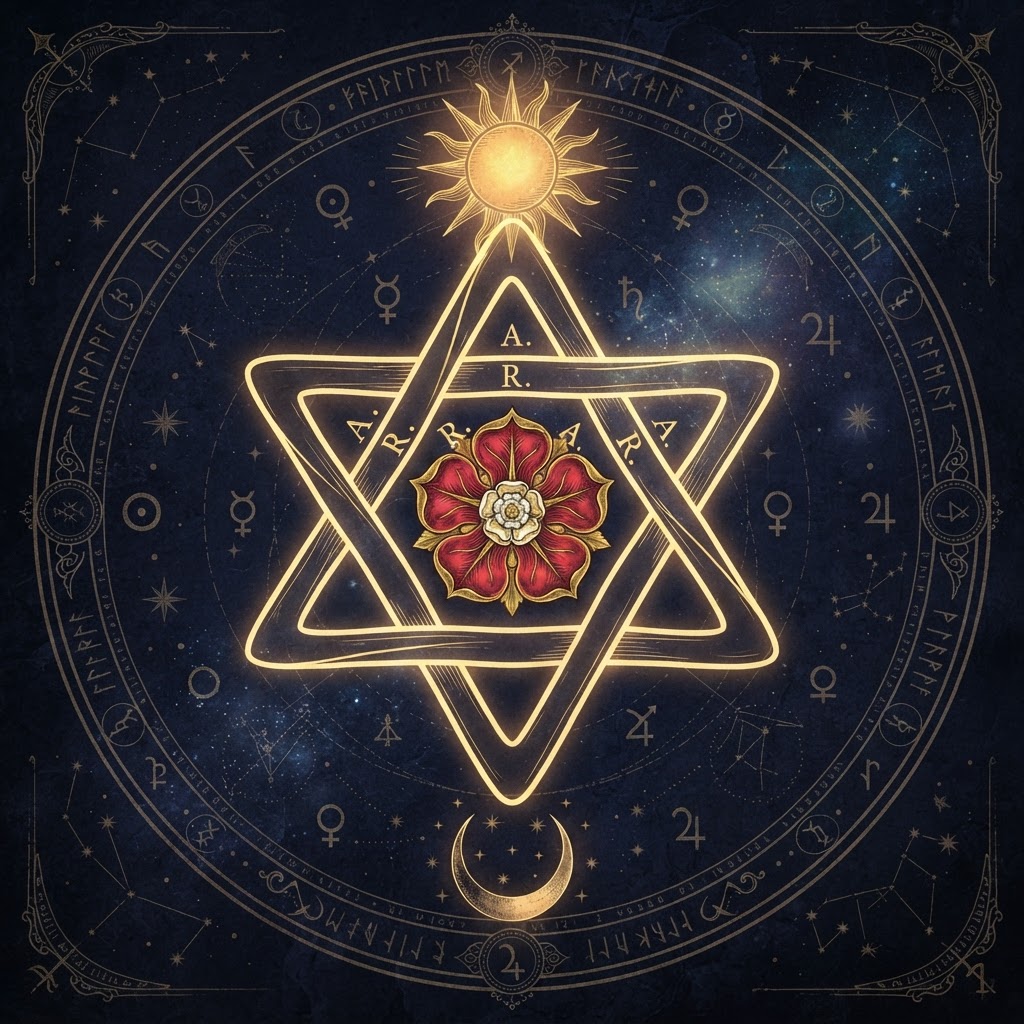
"Do what thou wilt shall be the whole of the Law. Love is the law, love under will."
Articulated by Aleister Crowley in Liber AL vel Legis (The Book of the Law, 1904), the Law of Thelema is perhaps the most misunderstood principle in Western esotericism. 'Do what thou wilt' is not a permission for hedonism — it is a mandate to discover and enact your deepest, truest purpose. The True Will is not the ego's desires but the innermost nature of the soul, analogous to the Dharma of Hindu thought.
Deeper Insight
Every being has a unique nature and a unique orbit. When a planet moves in its own orbit, it does so with perfect freedom and perfect law simultaneously. Crowley's insight is that moral confusion arises from the false wills of social conditioning, fear, and desire — not from the True Will, which when found and followed, produces an experience of perfect rightness.
Liber AL vel Legis — Thelema
Kabbalah
Ein Sof & The Sefirot
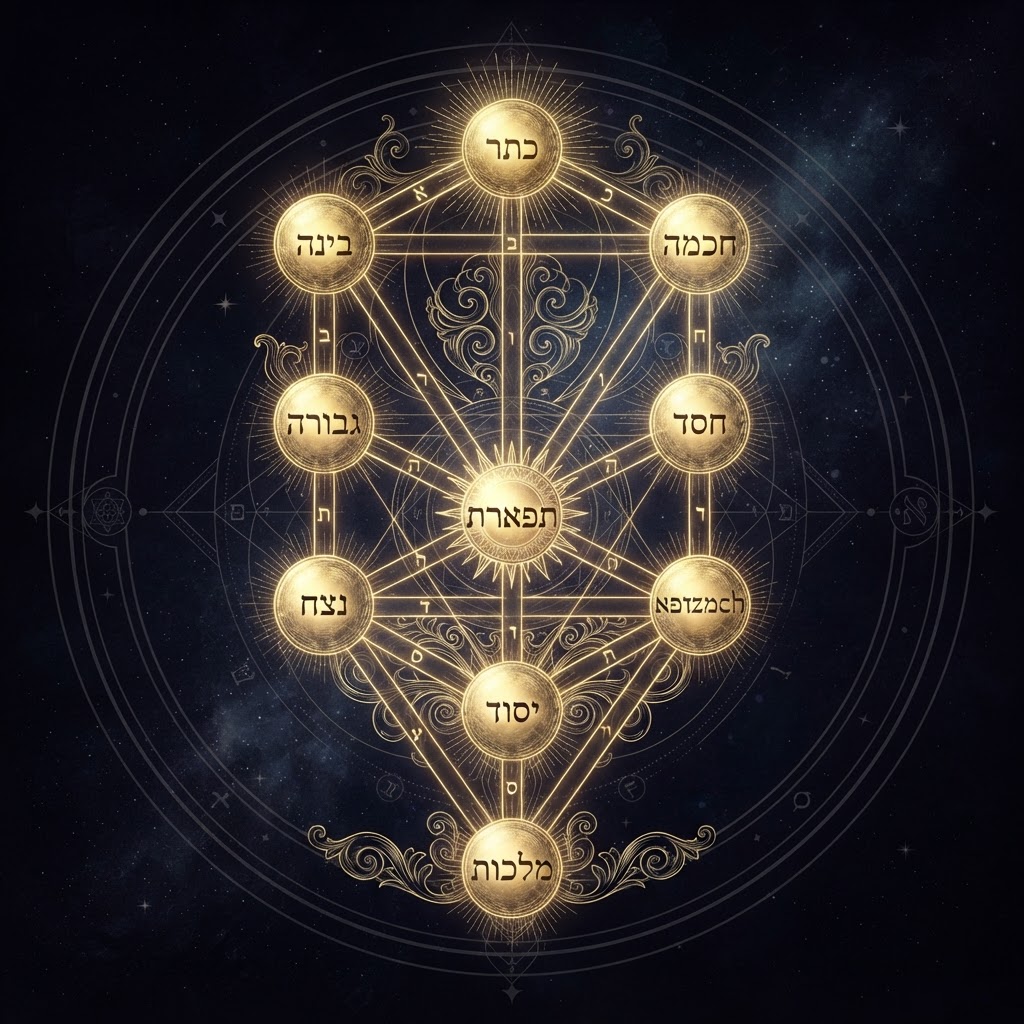
"From the Infinite, all finites emerge through the ten emanations."
The Kabbalistic Tree of Life is a map of consciousness and cosmos simultaneously. At its summit is Ein Sof ('without end') — the infinite, unknowable source beyond all qualities and predicates. From Ein Sof flow ten Sefirot or emanations, each representing a distinct quality of divine expression: Kether (Crown/unity), Chokhmah (Wisdom), Binah (Understanding), down through love, strength, beauty, and culminating in Malkuth — the kingdom of physical manifestation.
Deeper Insight
The Sefirot are not merely abstract categories — they are qualities of consciousness accessible to the practitioner. The path of return (teshuvah) is the ascending of the Tree, dissolving each identification until only Ein Sof remains. The great Kabbalistic teaching is that even the apparent separation between the human and the divine is itself a manifestation of the divine — the mystery of Tzimtzum, the self-contraction of the Infinite to create space for the world.
The Zohar — Kabbalistic tradition
Taoism
Wu Wei & The Tao

"The Tao that can be told is not the eternal Tao. The name that can be named is not the eternal name."
The Tao (Way) is the nameless, formless principle underlying all existence — not a creator god, not an abstract force, but the very nature of reality as it flows and unfolds. Wu Wei, its primary operational principle, is often translated as 'non-action' but is better understood as 'action without forcing' — the way water moves around obstacles, the way a master calligrapher moves from stillness. It is the alignment of one's action with the natural rhythm of the moment.
Deeper Insight
Taoist cosmology sees the universe not as a machine to be controlled but as a living process to be participated in. Virtue (Te) is not a moral achievement but a natural consequence of alignment with the Tao — the power that flows through one who has ceased to impose their ego upon the nature of things. This is the deepest expression of the principle of Rhythm: the sage rides the wave rather than fighting it.
Tao Te Ching — Laozi
Vedanta
Brahman / Atman
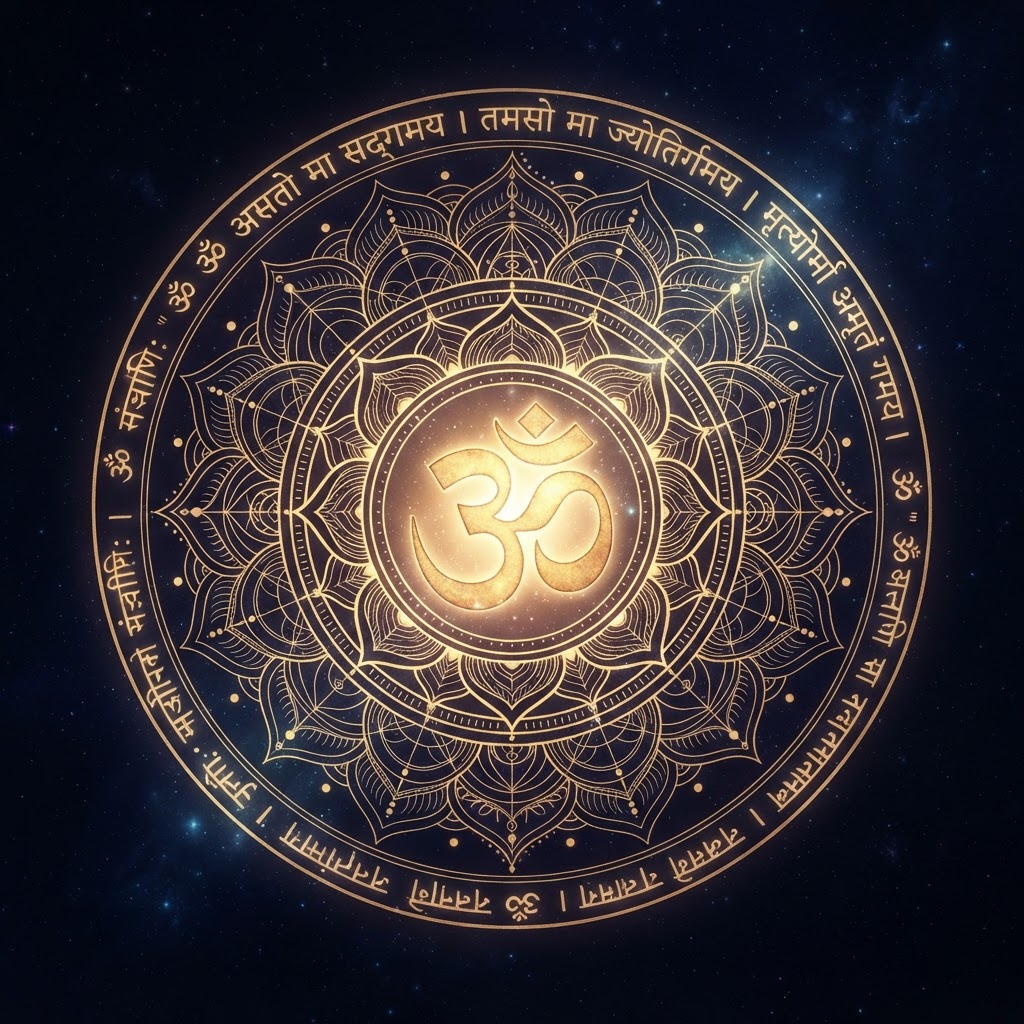
"Tat Tvam Asi — That thou art."
The summit of the Upanishadic teaching is the equation of the individual self (Atman) with the universal ground of being (Brahman). This is not a metaphor or a moral teaching — it is a metaphysical statement about the deepest nature of consciousness. The universe is not inhabited by consciousness; it is constituted by it. The Vedantic tradition offers multiple paths to the realization of this identity: Jnana (knowledge), Bhakti (devotion), Karma (action), and Raja (royal yoga).
Deeper Insight
Maya — cosmic illusion — is not the claim that the world doesn't exist but that it is not what it appears to be. Like a dreamer who takes the dream for waking reality, we take the multiplicity of forms for ultimate reality. The practices of Advaita Vedanta systematically dismantle false identification — with body, with thoughts, with feelings, with personality — until what remains is the pure witnessing awareness that was never born and will never die.
The Upanishads & Advaita Vedanta
Gnosticism
The Demiurge & The Divine Spark
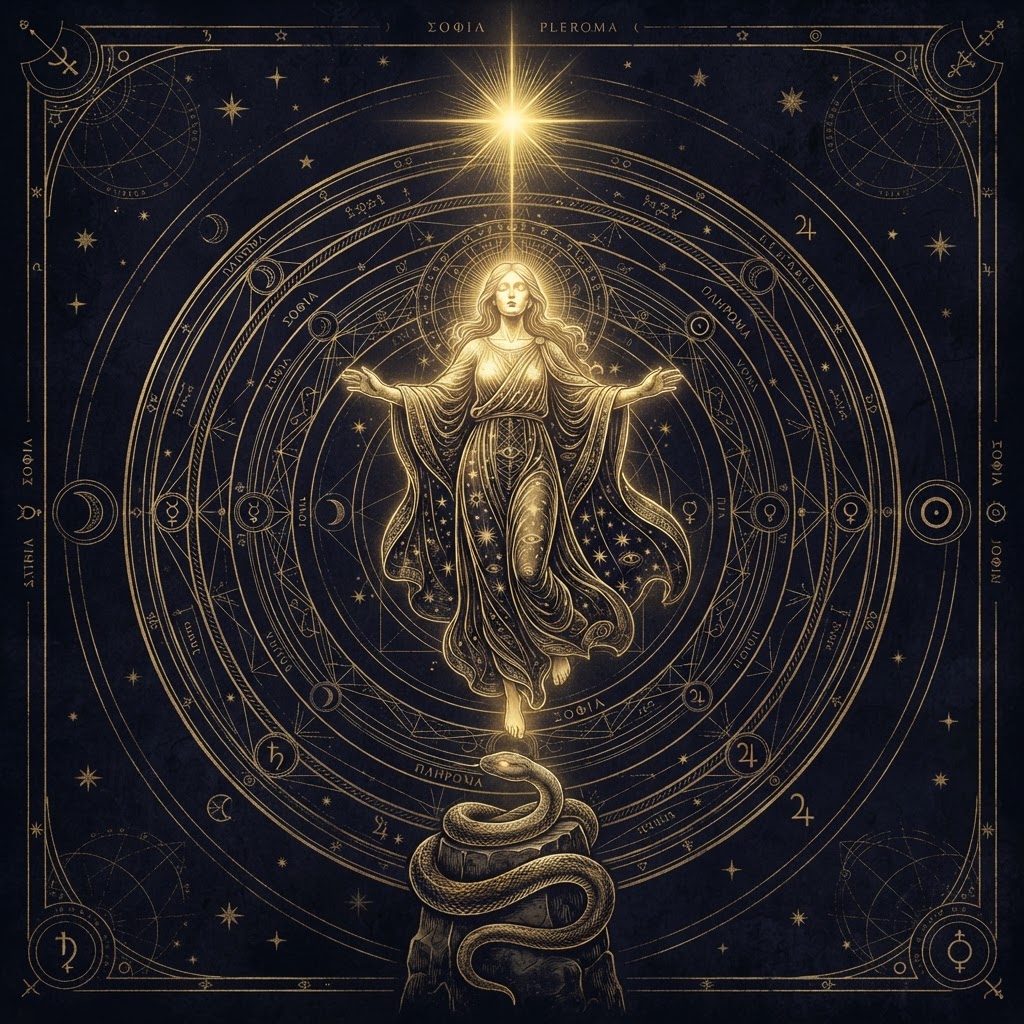
"The true God is beyond this world. The divine spark within you is the path home."
Gnostic cosmologies, flourishing in the 1st–4th centuries CE, present one of history's most radical perspectives: the material world was created not by the highest divine principle but by a lesser, ignorant or malevolent craftsman-god (the Demiurge). Within each human, however, there is a pneuma — a divine spark — which is a fragment of the true Pleroma (fullness of divine light) trapped in matter. Gnosis — direct experiential knowledge — is the means of liberation.
Deeper Insight
Whether taken literally or metaphorically, the Gnostic framework speaks to a profound felt experience: that the world as structured by conventional power does not reflect the deepest values of the soul, and that redemption cannot be granted from outside but must be discovered within. The Gnostic path is one of radical inwardness — the conviction that the kingdom of light is not a destination but a recognition.
The Nag Hammadi Library — Gnostic texts
Sufism
Fana — Annihilation in the Divine
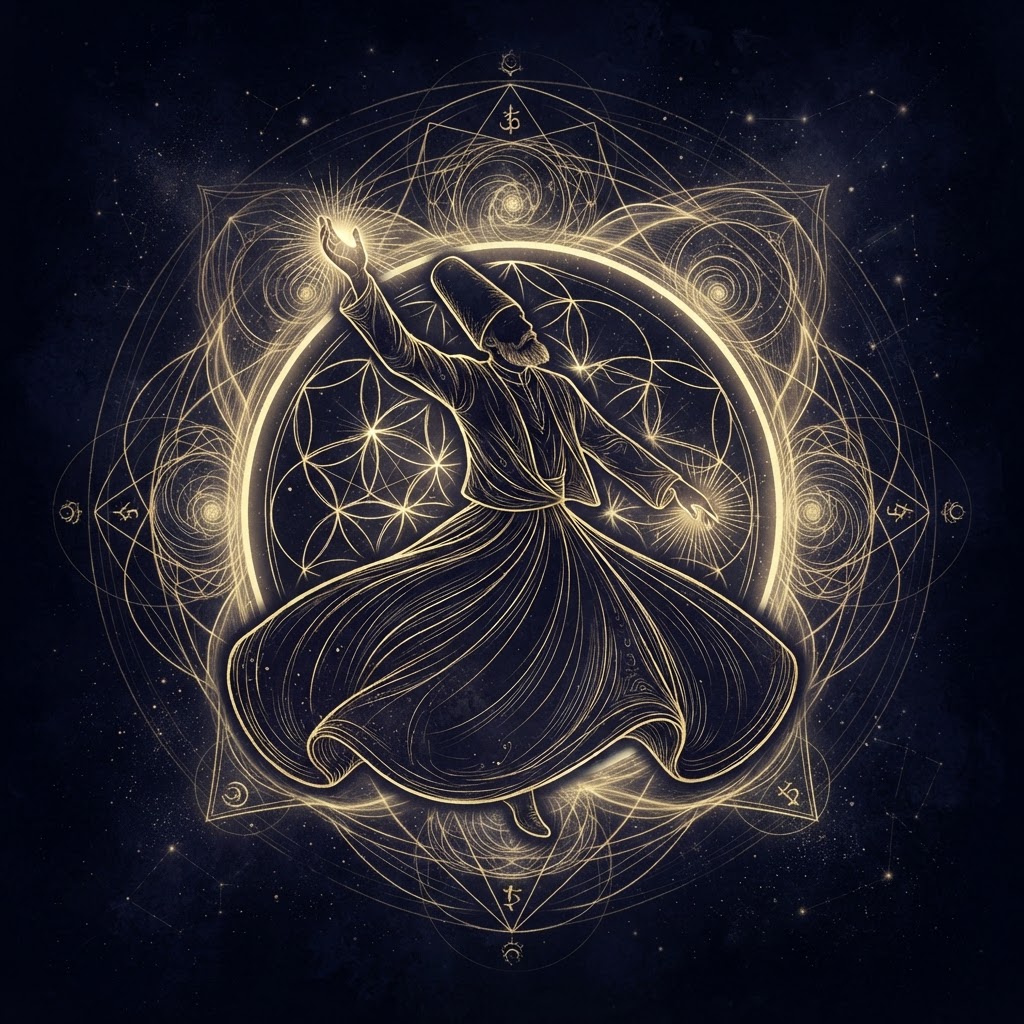
"Die before you die, and discover there is no death."
Sufism is the mystical heart of Islam, a tradition that has produced some of humanity's most exquisite poetry and most rigorous maps of inner transformation. Its central concern is the annihilation of the illusory self (nafs) in the fire of divine love, leading to baqa — subsistence in the divine. The great Sufi teachers — Rumi, Ibn Arabi, Hafiz — did not merely teach theology; they transmitted a technology of inner transformation through love.
Deeper Insight
Ibn Arabi's concept of Wahdat al-Wujud ('Unity of Being') is perhaps the closest Islamic parallel to Vedantic non-dualism: there is only one existence, and that existence is divine. The apparent multiplicity of forms is the self-disclosure (tajalli) of the divine. The mystic's path is to progressively see through the veil of separateness until only the One remains — experiencing all things as beloved manifestations of a single, infinite Love.
The Masnavi — Rumi; Fusus al-Hikam — Ibn Arabi
Comparative Lenses
One Principle, Five Voices
The Hermetic laws echo across traditions — each in its own tongue. Choose a principle and read how Kabbalah, Taoism, Thelema, Vedanta, and Sufism express the same truth.
The Kybalion says
“THE ALL is MIND; the Universe is Mental.”
Kabbalah
“Before all, there was only the Infinite Light — and the worlds are its thoughts, each Sefirah a depth within the Divine Mind.”
Sefer Yetzirah & the Zohar
Where the Kybalion says the Universe is Mental, Kabbalah maps that Mind: ten emanations, each a distinct mode of divine thinking. Creation is not an event but an ongoing act of attention.
Taoism
“The ten thousand things are born of Being; Being is born of Non-being. All flows from the still, unnameable source.”
Tao Te Ching, ch. 40
Taoism never says the world is 'mind' — but it insists the world flows from a formless, knowing source that precedes all distinction. Mentalism here wears the face of the uncarved block: pu, the simplicity before thought splits into things.
Thelema
“The word of the Law is Thelema — the universe is the play of infinite space (Nuit) and the infinitesimal point of view (Hadit), forever interweaving.”
Liber AL vel Legis, I–II
Crowley recasts Mentalism in terms of Will: existence is the gesture of consciousness defining itself. 'Every man and every woman is a star' — each mind a sovereign center in the universal mental fabric.
Vedanta
“All this is Brahman — the world is not matter appearing as mind, but mind appearing as matter.”
Mandukya & Chandogya Upanishads
The most direct parallel in world philosophy: the Kybalion's 'THE ALL is MIND' is essentially Advaita's 'Brahman alone is real.' Maya is not a trickster deity but the self-veiling of the one Mind into multiplicity.
Sufism
“I was a hidden treasure and I loved to be known — so I created the worlds, that My attributes might be seen.”
Hadith Qudsi — the treasure saying
In Sufism the cosmos is not mental by nature but divine by disclosure: all existence is tajalli, the self-showing of the One. Where Mentalism says 'the universe is a thought,' Sufism says 'the universe is a longing.'
Knowledge, not belief, is the path to freedom
The seven Hermetic principles are not articles of faith. They are not meant to be believed but to be understood, tested, and applied. The ancient teachers held that true knowledge — gnosis — comes through direct experience, through the alignment of thought, emotion, and action with the fabric of reality itself.
When we live in harmony with Natural Law, suffering dissolves — not because life becomes effortless, but because we cease to fight against the current of existence. We become co-creators, wielding the principles consciously rather than being unconsciously wielded by them.
"The Universe is Mental — held in the Mind of THE ALL."
The Kybalion — Three Initiates, 1908
As above, so below. As within, so without.